Dizziness Screening
Dizziness screening — MRI alone will not find the cause
Source : EBS Health "Myeongui" (13 Jul 2026)
Patients with dizziness have risen 38% in ten years, reaching 1.01 million a year.
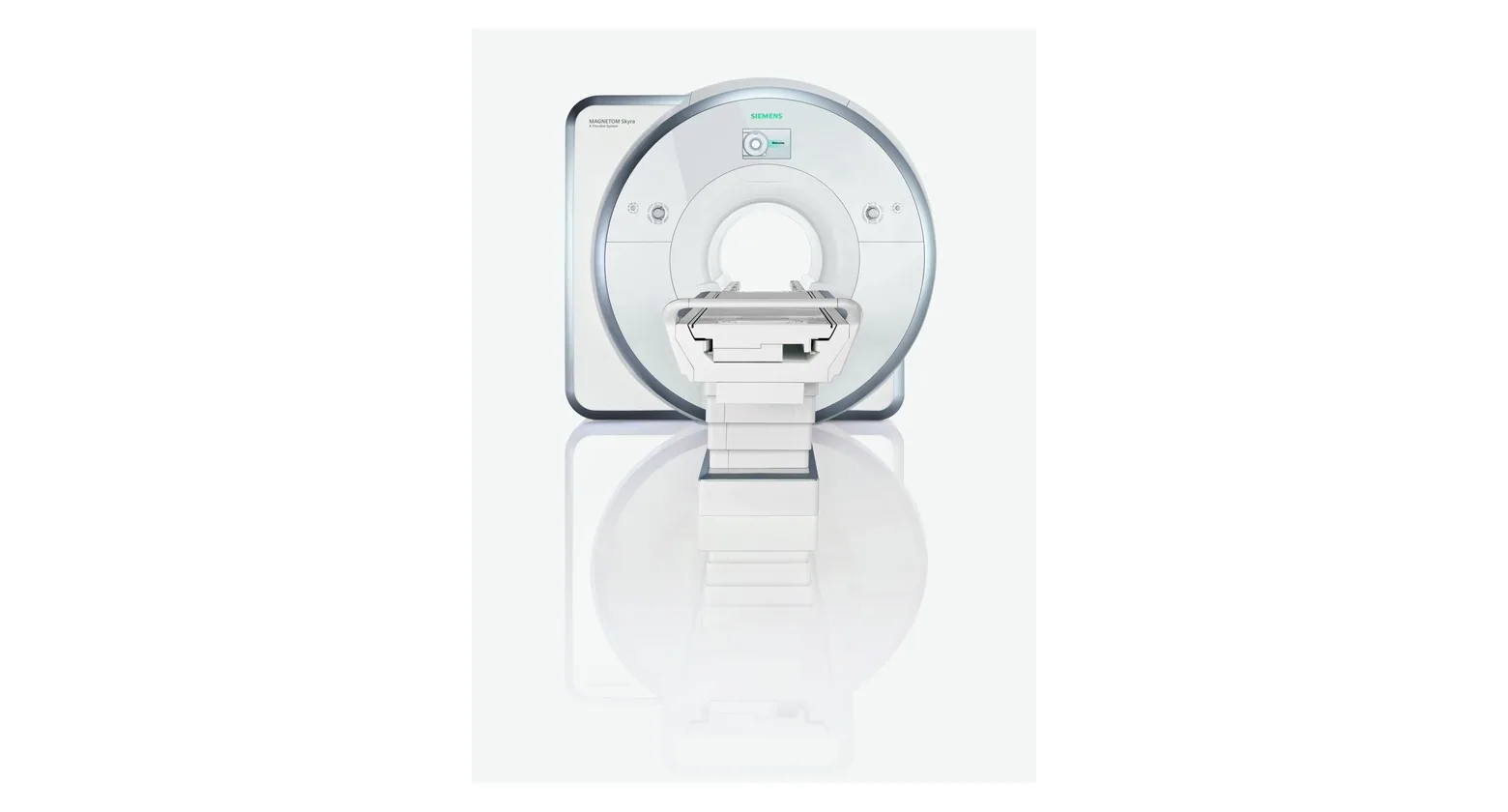
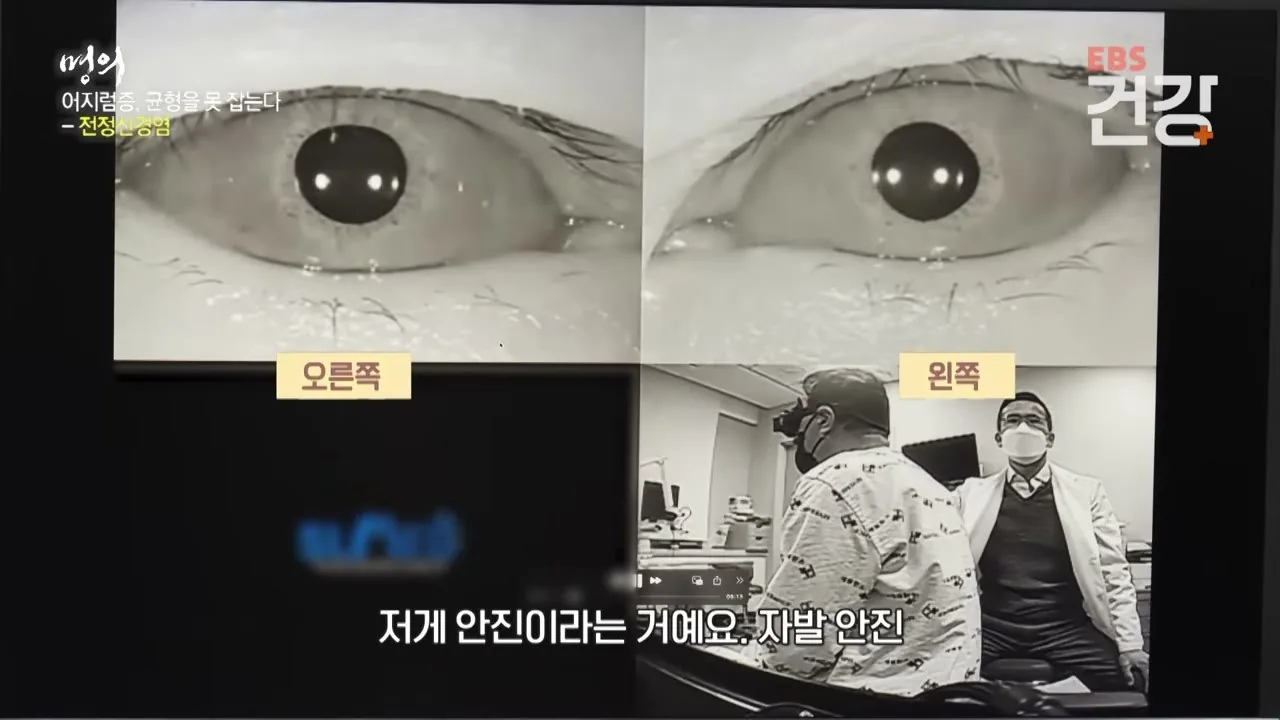
Yet the most common causes — BPPV, vestibular neuritis, and Meniere's disease — do not show up on MRI. They are identified only by measuring function directly: the direction and pattern of nystagmus, and the response to changes in posture.
Treatment differs entirely depending on whether the origin is the ear, the autonomic nervous system, or the brain.
Even when dizziness is mild, difficulty walking unaided, sudden limb weakness, or slurred speech may point to a cause in the brain. With recurring dizziness, the cause should be established before a fall causes injury.
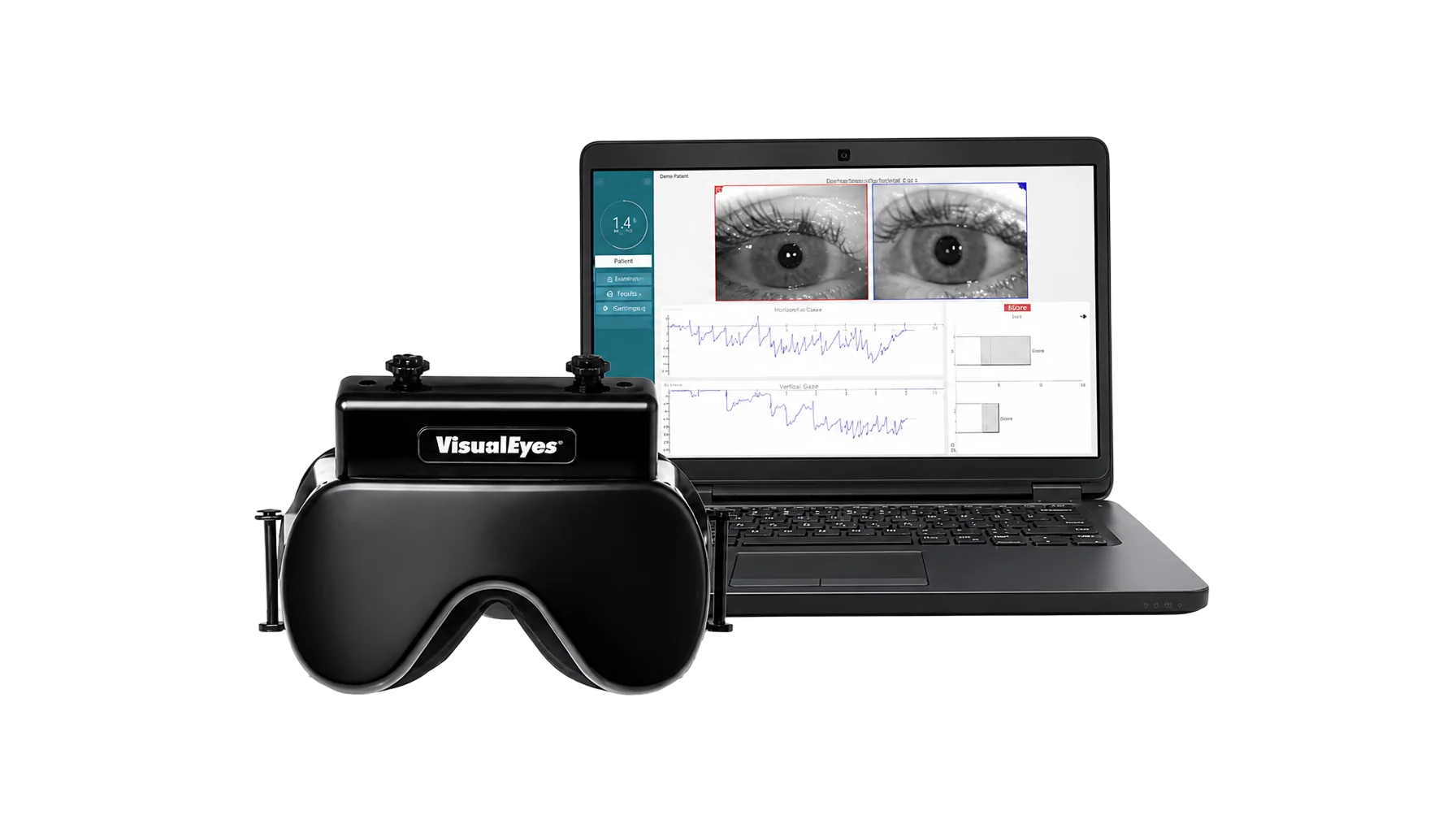
About video nystagmography
Eye movement testing
Spontaneous nystagmus test
Eye movement is observed without any stimulus applied.
Gaze-evoked nystagmus test
With the eyes turned 20–30 degrees up, down, left, and right, the patient fixes on a point about 50 cm ahead for roughly 10 seconds while eye movement is observed.
Smooth pursuit test
The patient tracks a single point moving horizontally or vertically, and eye movement is assessed.
Optokinetic nystagmus testing
The patient fixes on black lines drawn around them while being rotated at increasing speed, and the resulting nystagmus is recorded.
Detailed vestibular function testing
Caloric test
Caloric testing induces dizziness by delivering warm and cool air into each ear, then records eye movement to determine whether the vestibular organ is impaired. Lying on the examination table wearing goggles, air is introduced into the ear canal while eye movement is observed.
The expected duration is about 15 minutes, though it may vary somewhat with the patient's condition.Positional nystagmus test
This refers to nystagmus that does not appear ordinarily but emerges when the head is tilted into a particular position or angle. Lying supine — or supine with the head hanging over the end of the table — the head is slowly turned to each side, held in position for a set time, and eye movement is then observed.
Positional nystagmus testing
Positional nystagmus testing identifies the type of dizziness by observing whether nystagmus appears — and in what form — as head position and posture change. Lying on the examination table wearing goggles, you follow a dot on the ceiling with your eyes. The test proceeds through a variety of head positions: turning the head, sitting up and lying down, and letting the head hang below the edge of the table.
The expected duration is about 10 to 15 minutes, though it may vary somewhat with the patient's condition.Rotational chair test
With the head tilted 30 degrees forward during or after rotation, the patient is turned side to side at a fixed amplitude and frequency while the resulting nystagmus is compared and measured.
Head impulse test
The patient fixes their gaze on the examiner's nose while the examiner turns the patient's head briefly and rapidly from side to side and up and down, observing eye movement. When the vestibulo-ocular reflex is intact, the patient maintains fixation continuously; when the head is turned toward the affected side, a rapid corrective saccade is needed to regain fixation after the turn.
Autonomic and orthostatic testing
Autonomic testing — tilt table test
The tilt table test determines directly whether syncope or dizziness originates in the autonomic nervous system. When autonomic responses are exaggerated compared with normal, a sudden change of posture or an excessive response to cardiac medication can transiently lower blood pressure and heart rate, reducing cerebral blood flow and secondarily producing syncope or similar symptoms.
The test begins lying on a tilt table, which is then slowly raised so the head is above the heart, while the onset of symptoms and changes in pulse and blood pressure are observed. If syncope occurs during the test, or an excessive fall in blood pressure, a drop in pulse, or a change in cerebral blood flow is seen, the result is positive.
Tilt table test — method
- STEP 01
Rest for five minutes lying flat on the tilt table, facing the ceiling.
- STEP 02
A blood pressure cuff and probes are secured to the body to measure blood pressure and cerebral blood flow continuously.
- STEP 03
Blood pressure and heart rate are measured while lying flat.
- STEP 04
The table is raised to 70 degrees so the head is above the heart, and changes in blood pressure, heart rate, and blood flow are measured for 15 minutes.
- STEP 05
If no clear symptoms appear at 70 degrees, the table is returned to its original position.
- STEP 06
If dizziness, nausea, vomiting, or warning signs of fainting occur during the test, inform the medical staff.
The expected duration is 1 hour, though the duration may vary somewhat with the patient's condition. During the examination, the method may unavoidably be modified or the scope extended depending on the patient's condition.
What this screening can reveal
The same word — dizzy — covers causes that have nothing in common. Treatment differs entirely by cause, so telling them apart is where treatment begins.
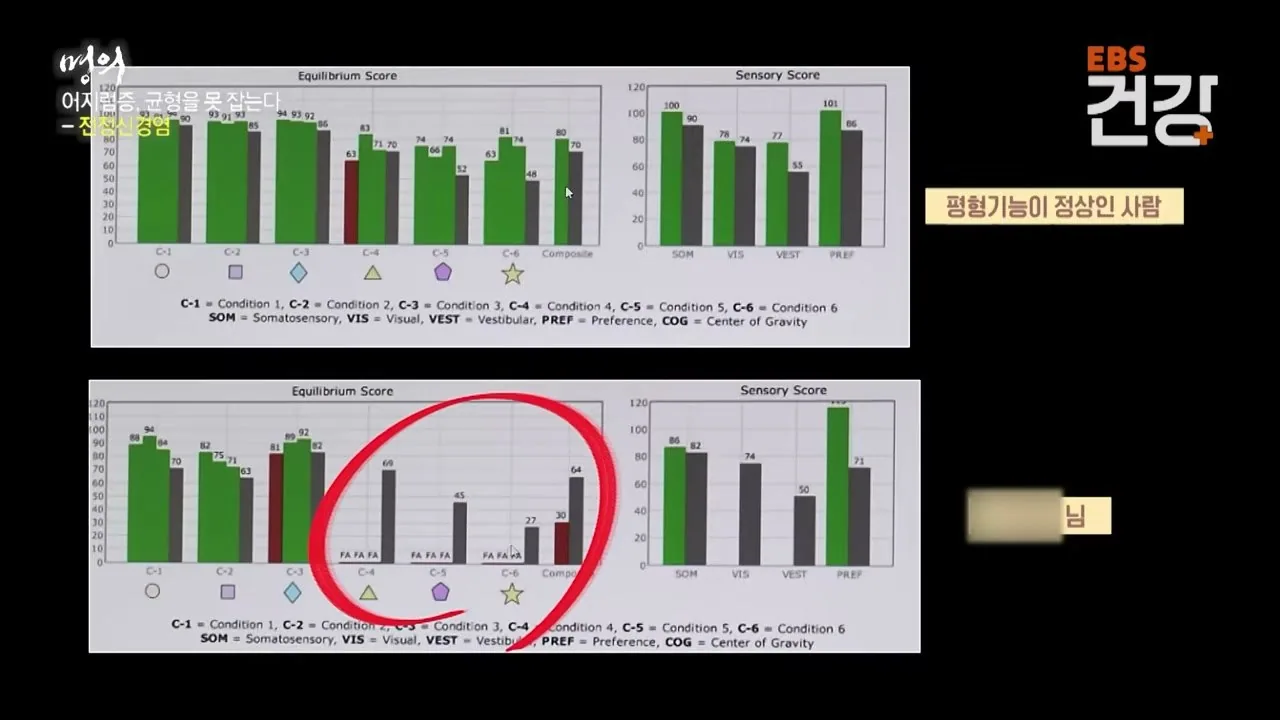
- Which side and which semicircular canal the BPPV arose in
- The degree of damage to left and right vestibular function and the course of recovery
- Distinguishing peripheral from central vertigo
- Distinguishing orthostatic hypotension from postural tachycardia
- Whether vasovagal syncope can be provoked
- Hearing abnormality accompanying dizziness, and the site of inner ear damage
We recommend this for
Spinning, light-headed, or floating — the suspected cause differs by the character and duration of the dizziness. If any of the following applies, the cause needs to be identified.
- Those experiencing recurring dizziness
- Those for whom the world spins on lying down, getting up, or rolling over
- Those who feel faint or whose vision blacks out on standing
- Those who have fainted or nearly fainted
- Those with accompanying tinnitus, ear fullness, or hearing loss
- Those who veer to one side or stagger when walking
※ This is general medical information provided for understanding only. The actual screening items and interpretation of results are determined after consultation with a specialist.