Cognitive rehabilitation (memory impairment)
Cognitive Rehabilitation
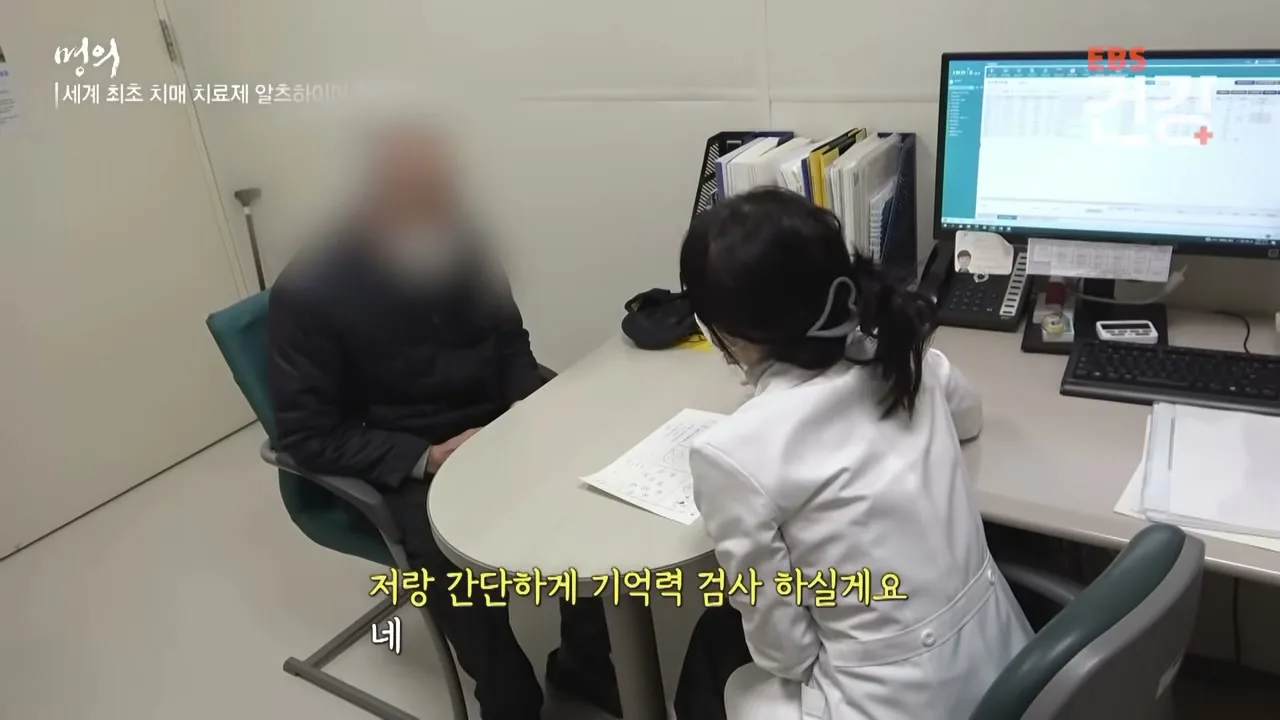
Source : EBS Health "Myeongui"
Cognitive rehabilitation — what kind of treatment is it?
With age, the brain's overall function declines considerably. But the brain, as an organ, responds to how it is used and to the repeated performance of tasks, and The intrinsic property by which new connections form between brain cellsexists. Cognitive rehabilitation makes use of this property of the brain and A program of repeated training divided by domain — memory, attention, and language.
Conventional memory medications work by modulating neurotransmitters to improve memory. Cognitive rehabilitation, by contrast, engages the cognitive domains that go underused, and Training preserves the functions that remain and improves those that have declined by other means.
Who should undergo cognitive rehabilitation?
Photograph of tablet-based cognitive rehabilitation
(to be supplied by the client — script of 21 Aug 2026)
Those diagnosed with mild cognitive impairment · those on medication for early dementia · those wishing to prevent memory decline in advance
First, through careful examination and neuropsychological testing, Which cognitive domains have declined, and by how much is established. The content of training differs depending on whether memory alone is affected, or attention and language have declined as well.
Cognitive rehabilitation used to mean working through tasks one-on-one with a therapist using paper workbooks and physical materials. Today, with the development of AI programs, Easily carried out with nothing more than a tabletis available.
The cognitive rehabilitation program used at our clinic
Table image from a paper on cognitive change
(to be supplied by the client — script of 21 Aug 2026)
The cognitive rehabilitation software program used at our clinic Dramatically shortens the time needed to create and prepare itemsThe advantage is that task difficulty can be adjusted in real time during rehabilitation training.
When performed at a clinic, usually 30–60 minutes per session, 1–3 times a week, over several months. The effect is greatest when combined with TMS and medication.
The program is also available at home on a subscription basis, and using a smartphone A program you can use for 30 minutes a day, like daily exerciseis available.
Former one-to-one therapy with a therapist vs. AI software cognitive rehabilitation program
| Former one-to-one therapy with a therapist | AI software cognitive rehabilitation program | |
|---|---|---|
| Training tools | Paper workbooks and materials | Smartphone, tablet |
| Preparation time | Finding and preparing suitable items for each patient one by one | Dramatically shortens the time needed to create and prepare items |
| How it works | Difficult to change from the difficulty of the prepared paper materials | The therapist can adjust task difficulty in real time |
| Training data | The inconvenience of recording results by hand | Training results are stored, making comparison with past records easy |
※ This is general medical information provided for understanding only. Whether and how to treat is determined by a specialist after examination, based on the individual patient's condition.